
From the Spectacular Debut of Roadster 2 to SILVERTHIN on the NHRA Dragstrip
RONGYI / PRECISION ENGINEERING STORIES
From the Spectacular Debut of Roadster 2
to SILVERTHIN on the NHRA Dragstrip
The Industrial Heritage of American Drag Racing × The Engineering Story of Precision Thin-Section Bearings
TESLA ROADSTER 2026 — Official Launch Photo Gallery ↗
Tesla / Car and Driver · October 16, 2026 · Consult the photo gallery to verify images of the newly unveiled vehicle
From a breathtaking automotive demonstration to decades of American advanced-manufacturing expertise;
from NHRA championship dragsters to SilverThin bearings in Bose and ClearMotion patents and electric race-car wheel hubs.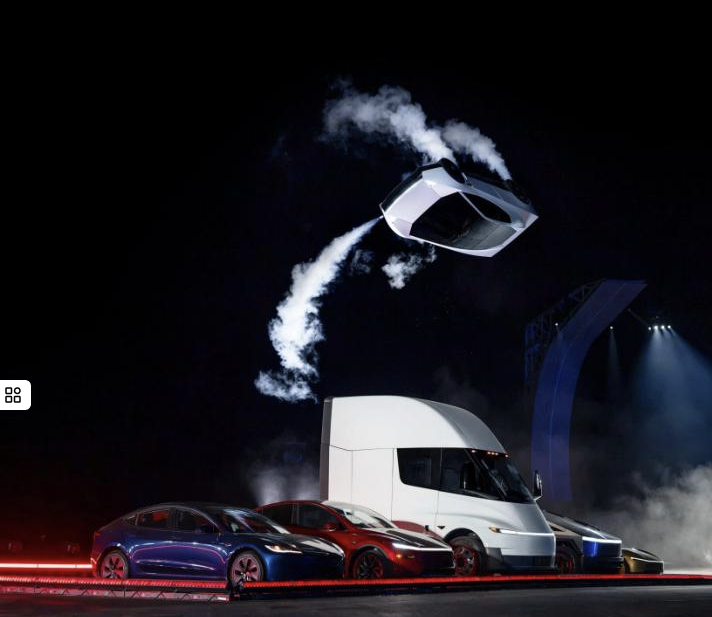
INDUSTRIAL TECHNOLOGY REVIEW / OCTOBER 17, 2026
Hangzhou Rongyi Technology Co., Ltd.
CONTENTS / OVERVIEW
Behind the Speed Lies an Industrial Ecosystem
This is not simply a bearing product introduction. It is an in-depth feature that begins with extraordinary vehicle performance and traces the story back to motorsports engineering, precision bearing technology and the global industrial supply chain.
01 Behind Roadster: Decades of Industrial Expertise
02 NHRA: Turning Extreme Acceleration into Measurable, Repeatable Engineering
03 The SILVERTHIN Name in NHRA Racing History
04 From a Race Win to the NHRA Heritage Series Championship
05 Understanding SILVERTHIN: Excellence Often Lies in the Smallest Components
06 From Bose to ClearMotion: SILVERTHIN in U.S. Motion-Control Patents
07 From Motorsports Sponsorship to Engineering Application: Electric Formula Racing
08 From American Racing Heritage to Engineering Applications in China
Editor's Note
This feature draws on public race records, media coverage, original manufacturer information and patent documents. Performance figures retain the dates and demonstration conditions reported by their sources. For SilverThin bearing applications, references in patents to optional bearing designs are distinguished from documented physical installations. The images used are traceable photographs and original patent illustrations. Some images are linked externally in Word and may require an internet connection and permission to update links. Original image URLs are retained in the captions.
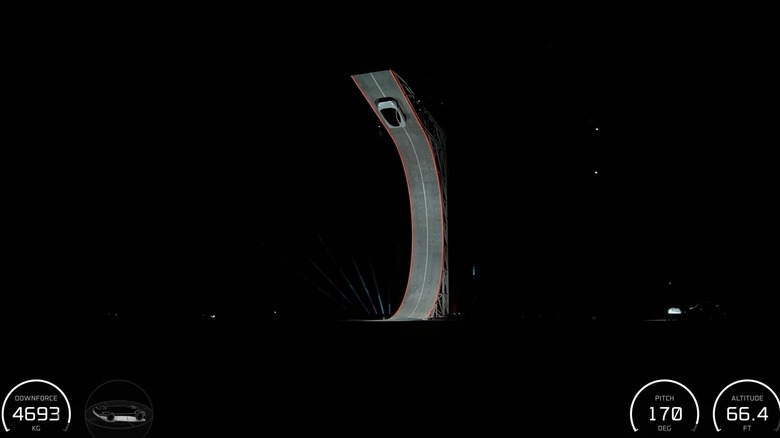
On October 15, 2026, at the SpaceX test facility in McGregor, Texas, a white second-generation Tesla Roadster transformed an automotive reveal into something that resembled science fiction. Using an active suction system beneath its body, it drove onto a curved structure and remained attached even while inverted. It then used high-pressure cold-gas thrusters to rise briefly into the air, change orientation and land. The demonstration pushed far beyond conventional expectations of an “electric sports car.”[reuters]
The most astonishing figure came from the acceleration demonstration. Tesla showed a 0–60 mph (approximately 96.6 km/h) run in under one second; some reports cited a demonstrated time of 0.81 seconds. This was a prototype demonstration at the launch event, not an independently certified production-car record. Even so, the technological direction was extraordinary: high-output electric drive, active aerodynamics and SpaceX cold-gas propulsion were being brought together in a single vehicle.[caranddriver]
0.81 s Launch demonstration: 0–60 mph | 2028 Tesla’s announced production target | 3 Electric drive, suction and cold-gas propulsion |
FIG. 01 Tesla Roadster unveiled on October 15, 2026. Sources: Tesla and on-site coverage by Car and Driver; see the original launch photo gallery.2026 launch photo gallery (Tesla / Car and Driver) ↗
01 | Behind Roadster: Decades of Industrial Expertise
The Roadster spectacle certainly reflects the imagination of Elon Musk and his engineering team, who dare to push beyond traditional automotive boundaries. Yet when a car aims for seemingly impossible instantaneous acceleration, success depends on far more than an eye-catching number. An entire engineered system must work reliably together: how quickly the motors deliver torque; how the tires transfer power to the road; how the chassis manages load transfer; how drivetrain components withstand shock; and how the control system makes decisions within milliseconds.
Such a foundation cannot emerge out of a single product launch. In the United States, the automotive, aerospace, precision-machinery, racing-modification and professional testing industries have developed alongside one another for decades. Motorsport is among their most immediate and demanding proving grounds. Every launch, measured time and component failure yields experience that can inform the next generation of machines.
02 | NHRA: Extreme Acceleration as Repeatable Engineering
The National Hot Rod Association (NHRA) is a major organizer of American drag racing. To spectators, NHRA racing may look like a straight strip, two competing vehicles and timing lights at the finish line. To engineers, it represents an ecosystem built around extreme acceleration. Tire compounds, suspension setups, combustion or electric powertrains, clutch and transmission systems, lightweight structures, safety equipment, data acquisition and track-surface conditions all undergo rigorous, repeatable testing.[nhra_heritage]
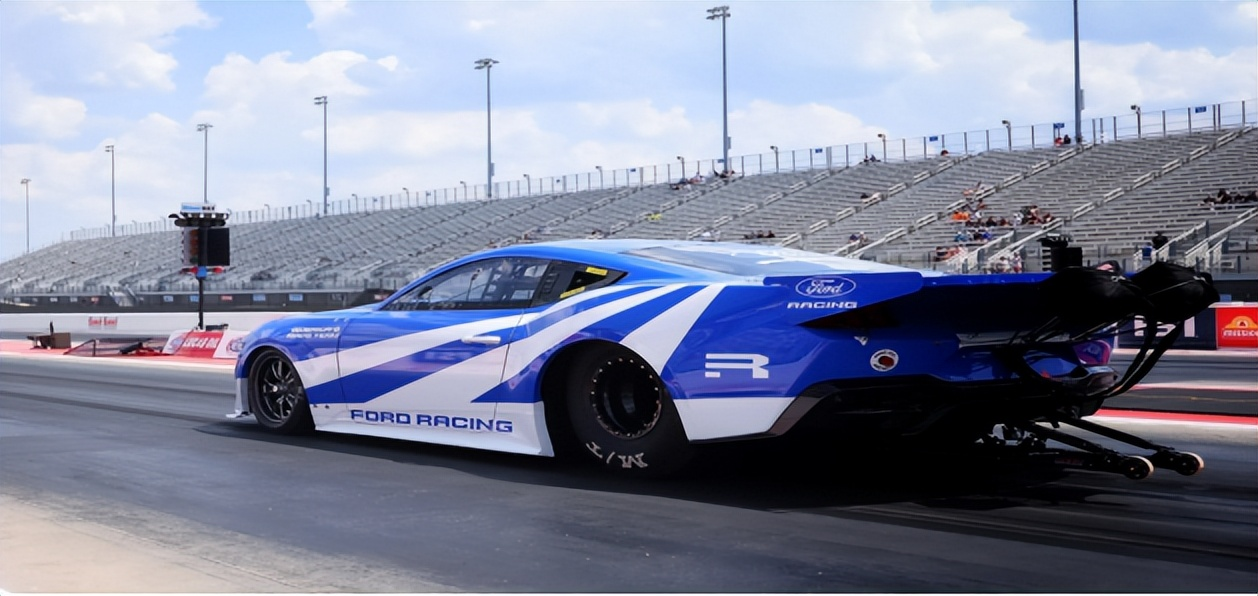
An especially compelling example came in April 2026, when Ford Racing brought the all-electric Mustang Cobra Jet 2200 to the NHRA 4-Wide Nationals. It recorded a best quarter-mile elapsed time of 6.766 seconds and a top terminal speed of 222.36 mph. These were separate best figures recorded during the event. Far from an ordinary production EV, the car was purpose-built for drag racing. It illustrates how the NHRA arena has become a proving ground for high-performance electric drive systems operating at the limit.[nhra_ford]
FIG. 02 Ford Mustang Cobra Jet 2200, a purpose-built electric drag racer. Source: Ford (2026). View original image ↗
Looking from the Roadster toward NHRA invites a broader reflection: world-changing innovation certainly calls for brilliant ideas, but a mature, extensive industrial supply chain is what allows those ideas to become reality. For decades, American drag racing has pursued “faster, lighter, more precise and more reliable” machines, cultivating the engineering knowledge that supports today’s cross-disciplinary breakthroughs. The two need not have a direct procurement or development relationship to reflect the same industrial heritage.
03 | The SILVERTHIN Name in NHRA Racing History
 Tracing this racing heritage brings into view a notable American precision-bearing brand: SILVERTHIN. Today the brand is best known for constant-cross-section thin-section bearings, slewing bearings and special bearing designs. Historical reports, however, also document its longstanding association with classic American drag racing.
In June 2006, at the National Hot Rod Reunion in Bowling Green, Kentucky, a period race-photo report identified the car driven by Sean Bellemeur as the “Plaza Hotel – SilverThin Bearings sponsored car.” Bellemeur ran 5.869 seconds in the semifinal, setting a track record at the time. The race car, driver, sponsoring brand and timing result were all preserved in the same illustrated historical account.[2006]
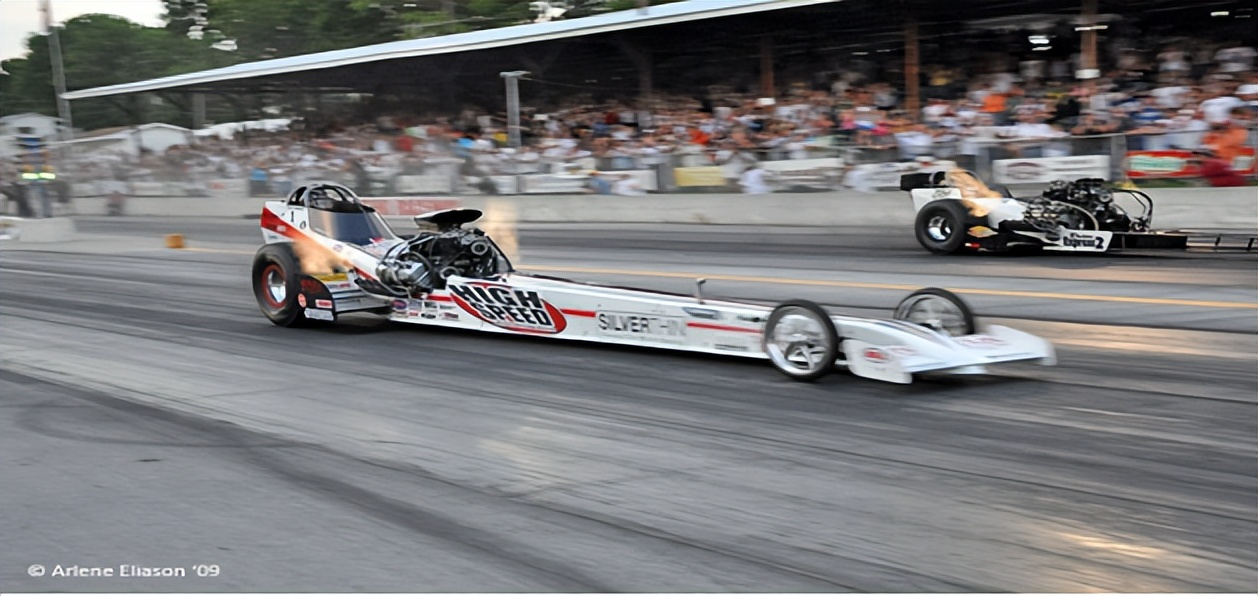
From May 30 to June 1, 2008, Famoso Raceway near Bakersfield, California, hosted the Fuel & Gas Championships. Driving the High Speed Motorsports / SilverThin Bearings Nostalgia Top Fuel dragster, Troy Green advanced to the final and won the event with a 5.749-second run at 261.09 mph. The historical report identified the car by that combined team-and-sponsor name. For SILVERTHIN, it marked a genuine place in a winning moment of American nostalgia Top Fuel drag racing.[2008]
2006 SilverThin-sponsored racer sets track record | 5.749 s 2008 winning final-round time | 261.09 2008 terminal speed (mph) |
FIG. 03 High Speed Motorsports Nostalgia Top Fuel dragster. Photograph: Arlene Eliason (2009); the High Speed branding is visible on the bodywork. View original image ↗
04 | From an Event Victory to the NHRA Heritage Series Championship
In October 2008, the California Hot Rod Reunion was both a gathering of classic racing machinery and the season finale of the NHRA Hot Rod Heritage Series. According to motorsports publication Rod & Custom, Troy Green secured the 2008 Nostalgia Top Fuel championship. Earlier that season, he had competed in the dragster known as High Speed Motorsports / SilverThin Bearings.[champ08]
In August 2009, Draglist documented another memorable expression of the brand’s connection with racing. Kent Ross, president of SILVERTHIN parent company Mechatronics, invited more than 100 business partners, guests and employees to an open-house event at the company’s Washington State facility. On display was its sponsored High Speed Motorsports championship dragster, described in the report as a roughly 3,000-horsepower, 250-mph machine. For an industrial-components company, this was more than an advertising display: it brought employees, supply-chain partners and the culture of drag racing together.[2009]
The team’s racing story continued in the following years. NHRA records show that Mendy Fry, driving for High Speed Motorsports, won the Nostalgia Top Fuel category at the 2018 California Hot Rod Reunion and secured the corresponding NHRA Hot Rod Heritage Series championship, with a 5.610-second final at 259.36 mph. In 2019, she won the California Hot Rod Reunion again, recording 5.526 seconds at 264.91 mph, and successfully defended her series title. The team’s sustained accomplishments are an impressive part of American drag-racing history.[2019]
A specialist AA/Fuel team directory also listed SilverThin among the sponsors of High Speed Motorsports, alongside Mastercam, Donovan and High Speed Heat Treating. The record illustrates how industrial software, engine technology, precision machining and bearing companies formed a real network of brand and technical connections around the same race team.[teams]
05 | Understanding SILVERTHIN: Excellence in the Details
SILVERTHIN is a precision thin-section and slewing-bearing brand within the U.S.-based Mechatronics Corporation. In precision machine design, the value of a thin-section bearing is not merely that a conventional bearing has been made thinner. Its characteristic design maintains a relatively constant cross-section across different bore sizes, allowing engineers to increase through-bore diameter, conserve mounting space and manage structural weight while retaining suitable rotational support.[brand]
The manufacturer’s selection range includes Type C radial-contact, Type A angular-contact and Type X four-point-contact configurations. Type C bearings are primarily suited to radial loads; Type A bearings can accommodate combined loading and may be installed in matched pairs; and Type X four-point-contact bearings can, in appropriately designed assemblies, accommodate radial loads, axial loads in either direction and certain overturning moments in space-constrained mechanisms. Final selection must consider the complete load spectrum, stiffness, speed, precision, preload, lubrication and mounting fits.[types]
FIG. 04 SILVERTHIN thin-section bearing — original manufacturer product photograph.
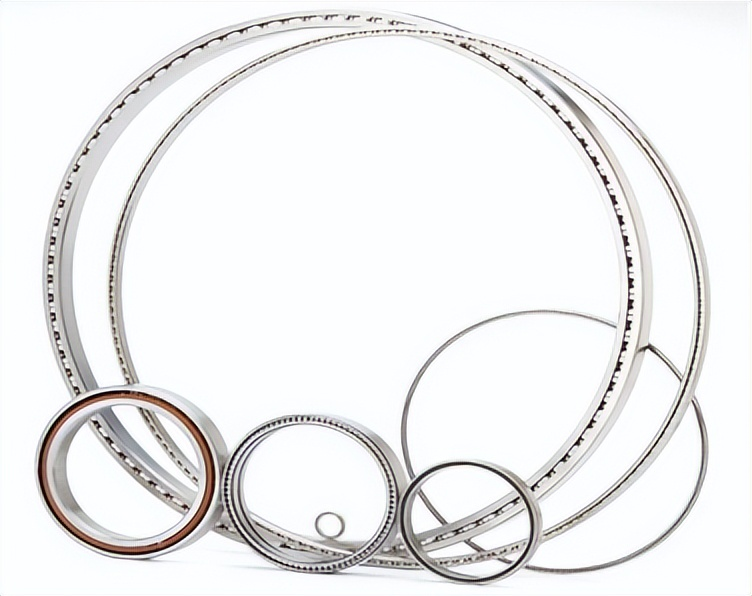
Such bearings are especially relevant to robotic joints, semiconductor equipment, medical imaging systems, precision rotary tables, electro-optical stabilization platforms and lightweight rotating mechanisms. The closer a machine design approaches limits of space, mass and rigidity, the more carefully its seemingly minor bearing elements must be engineered. Advanced industrial capability is built from thousands of such details.
06 | From Bose to ClearMotion: SILVERTHIN in Motion-Control Patents
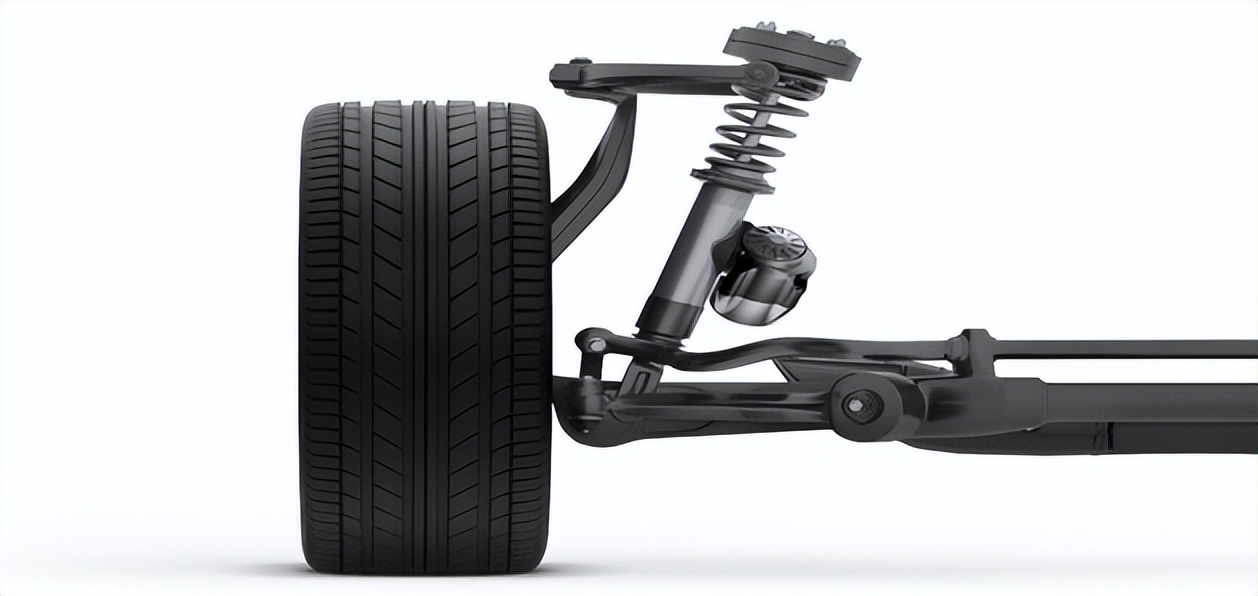
Beyond the extreme speed of the dragstrip, another ambitious direction in American automotive engineering deserves attention. If a vehicle can precisely control its engine, electric motors and braking forces, why not actively manage every vibration and movement of the body? That question inspired Bose Corporation, a globally recognized electronics company, to research electromagnetic active suspension and vibration-control technologies for many years. Instead of merely varying damper resistance, its concept used sensors, control algorithms and electromagnetic actuators to respond actively to motion between the vehicle body and the road. In 2018, technology publication New Atlas revisited this development when describing Bose’s pioneering work and ClearMotion’s continuation of related technology.[NewAtlas]
FIG. 05 ClearMotion active-suspension hardware. Source: ClearMotion / New Atlas (2018). Shown as background to the suspension technology. View original image ↗
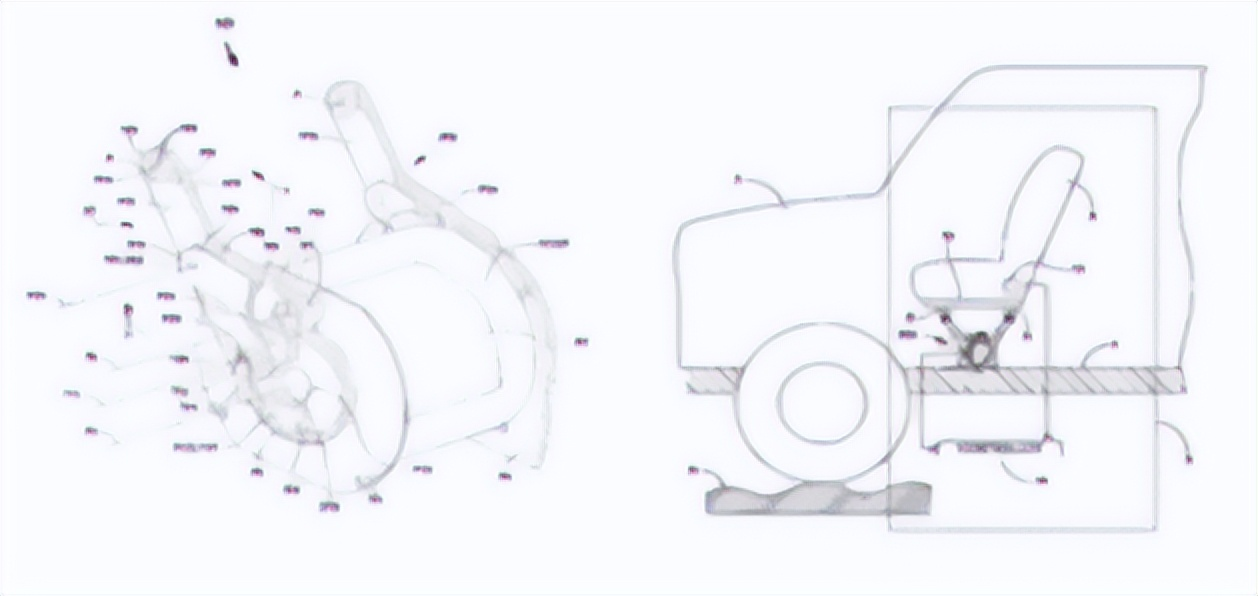
Of particular interest is that SILVERTHIN appears in a Bose patent not simply as a general brand reference but as a specific angular-contact thin-section bearing in an actuator design. U.S. Patent US8360387B2, entitled “Actuator including mechanism for converting rotary motion to linear motion,” was filed by Bose Corporation on March 26, 2010 and issued on January 29, 2013. Its design combines a rotating electric motor with a linkage mechanism to convert rotary output into controlled linear motion within a restricted envelope, with possible applications including active vibration control.[US8360387]
PRIMARY-SOURCE EVIDENCE / U.S. PATENT Bose Patent Explicitly Names SilverThin SB035 In describing rotor bearing 89, the U.S. patent expressly identifies the SilverThin™ SB035 angular-contact thin-section bearing, sold by Mechatronics Corporation, as an option. “The rotor bearing 89 may be a thin section bearing such as a Silverthin™ model SB035 angular contact bearing” Verbatim quotation from the patent specification; model designation and technical terminology retained. The significance of this reference lies in its specificity. The patent identifies not only the brand but also the SB035 model, its angular-contact configuration and its location supporting the motor rotor. In a fast-response actuator, the rotor bearing must address speed, stiffness, running accuracy and axial loading within limited installation space. Naming a specific thin-section bearing in the patent illustrates the consideration of this precision-support option within Bose’s engineering work. |
FIG. 06 Original illustration from Bose U.S. Patent US8360387B2. SilverThin SB035 is cited in the specification rather than labeled on the drawing. View original patent illustration ↗
This technology did not remain solely in an early U.S. patent. On February 20, 2018, the recorded assignment of US8360387B2 identified ClearMotion Acquisition I LLC. Japanese Patent JP6551948B2, in the same patent family, lists that company as the applicant; the Japanese application was filed on November 27, 2017 and the patent was granted on July 31, 2019. Its description of rotor bearing 89 likewise names SilverThin SB035 angular contact bearings as a possible thin-section bearing solution. Public patent databases therefore permit the technical lineage from Bose’s research to ClearMotion to be checked across jurisdictions.[US][JP]
FIG. 07 Original Bose / ClearMotion patent assignment records. See the patent database for legal-status details.View U.S. patent assignment record ↗
From an industrial perspective, these patents reveal something significant: the value of precision thin-section bearings is not confined to rotary tables and robotic arms. Such bearings may also be important within active suspensions, vibration-control systems and sophisticated electromechanical actuators. Roadster 2 showcases the imaginative possibilities of vehicle motion control; Bose and ClearMotion show the long-term electromechanical design work behind such advances. From the race circuit to control systems, and from spectacular vehicle performance to rotor support, advanced automotive engineering rests on a succession of precise technical choices.
TECHNICAL NOTE | The Bose patent describes an actuator design in which SilverThin SB035 may be used. It provides verifiable evidence of a specified engineering option. Bose’s historical active-suspension program and this actuator patent belong to a related motion-control technology context; they should not be confused with a documented production installation of the same bearing assembly.
07 | From Racing Sponsorship to Engineering Application: Electric Formula Racing
FIG. 08 Original Wisconsin Racing in-hub motor engineering report (PDF). Bearing selection and arrangement are documented in the report.View original engineering report ↗
The University of Wisconsin’s Wisconsin Racing team documented the use of SILVERTHIN angular-contact thin-section bearings in its 2017 Formula SAE Electric in-hub motor design, where a compact package was essential. Two bearings were arranged back-to-back and matched to a specified preload. The report records support from the manufacturer’s engineers in bearing selection, load analysis and service-life studies.[wisconsin17]
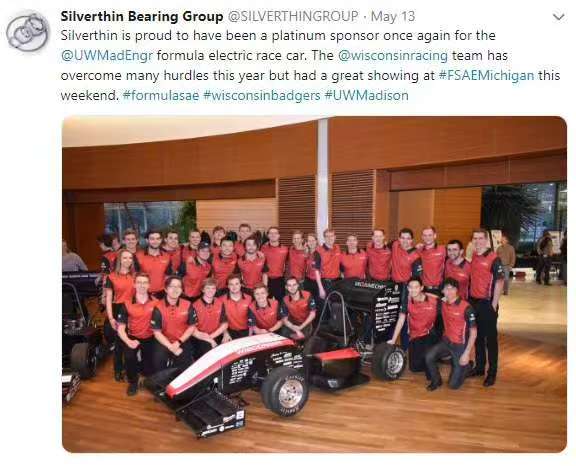
The team’s follow-up 2018 Corner Assembly engineering report details further collaboration. It provided SILVERTHIN with simulated track-load histories, which the manufacturer used for bearing-life predictions. The team also discussed critical parameters such as preload and fit tolerances with the manufacturer. These primary engineering documents show how precision thin-section bearings enter a real racing development process—not merely as a sponsor logo, but as part of detailed design, calculation and verification.[wisconsin18]
From its historical sponsorship of Nostalgia Top Fuel racing to the advanced actuator patents of Bose and ClearMotion, and from there to wheel-bearing design for an electric Formula SAE car, SILVERTHIN appears in a range of documented American motorsports and high-end mechanical-engineering contexts. Together, these records reflect several dimensions of a precision industrial brand: an enduring interest in extreme performance, compatibility with advanced design concepts, and sustained attention to engineering detail.
08 | From American Racing Heritage to Engineering in China
Looking back at the remarkable Roadster 2 reveal, we see more than an electric sports car that might redefine the boundaries of acceleration. We see the capacity to turn audacious ideas into engineered reality. Decades of NHRA racing records; the sustained exploration of active motion control by Bose and ClearMotion; advances in American automotive and aerospace technology; and the cumulative expertise of countless precision-component suppliers in materials, tolerances, structures and reliability all create an environment where innovation can flourish.
For equipment manufacturers in China, that technological value is far from remote. What matters is being able to identify the right precision components early in development, understand the limits of manufacturer specifications, obtain dependable part-number cross-references, drawings and application support, and convert laboratory concepts into reliable, deliverable machinery.
SILVERTHIN / CHINA DISTRIBUTION Bringing American Precision-Bearing Expertise to Chinese Engineering SILVERTHIN lists Hangzhou Rongyi Technology Co., Ltd. as a “Chinese Distributor” in the global distributor directory on its official website. Through this manufacturer-listed distribution channel, Hangzhou Rongyi serves customers in China and the Greater China region with product information, part-number verification, technical communication and sourcing support for SILVERTHIN constant-cross-section thin-section bearings, slewing bearings and related precision-motion products. From robotics and semiconductor equipment to medical imaging, optical stabilization platforms and precision automation, Hangzhou Rongyi aims to translate international precision-manufacturing expertise into practical technical assistance for customers. The power of advanced manufacturing is evident not only in world-class engineering demonstrations such as Roadster, but also in every careful bearing selection, verified drawing and reliably running machine. Verify SILVERTHIN Distributor Listing ↗ Hangzhou Rongyi Official Website ↗ |
Sources and Verification Links
01 Roadster 2026 unveiling and demonstration | 09 Official NHRA results: 2019 |
02 Roadster engineering and acceleration reporting | 10 Wisconsin Racing engineering report: 2017 |
03 NHRA electric drag-racing results | 11 Wisconsin Racing engineering report: 2018 |
04 High Speed Motorsports: 2006 race report | 12 SILVERTHIN manufacturer product guide |
05 SilverThin-sponsored dragster: 2008 event win | 13 SILVERTHIN official distributor directory |
06 2008 NHRA Heritage Series championship | 14 Bose U.S. Patent US8360387B2 (SB035 cited) |
07 2009 SilverThin motorsports open house | 15 ClearMotion Japanese Patent JP6551948B2 (SB035 cited) |
08 Official NHRA results: 2018 | 16 New Atlas (2018): Bose and ClearMotion technology |